
IVF in Turkey – Why Choose to Do Your IVF in Turkey?
Many patients choose to go to Turkey to undergo in vitro fertilization treatment. Istanbul is recognized as one of the most dynamic regions for assisted reproductive technology (ART), with a large number of specialized clinics. Unlike in France or Algeria, the age limit for women is 45 years. Some clinics, like ours, make the patient’s stay easier by offering nearby accommodations, included transportation services, and full support throughout the entire duration of the stay.
What Is the Cost of IVF in Turkey?
The cost of in vitro fertilization (IVF) or ICSI in Turkey ranges between 2,400 – 5,000 euros, excluding stimulation medications. This price depends on the services and amenities offered by the clinics (blood tests, analyses, monitoring, translations, etc.). However, when the advertised starting price is very low, it rarely reflects the total final cost the couple will have to pay. Therefore, before choosing a clinic, it is necessary to to compare them by including all costs and expenses during your stay, or to opt for a clinic offering a complete IVF package to reduce expenses. Our clinic, for example, offers a comprehensive package that ensures a worry-free trip.
It is also important to account for the cost of freezing sperm or embryos in case of a frozen transfer. Freezing fees will then apply. Additionally, consider the cost of the PGT (preimplantation genetic testing), which can increase your chances of a successful transfer to over 60% on the first attempt.
Some additional specialized techniques, such as extended culture (blastocyst), the embryoscope, or the IMSI technique, come at an extra cost at certain centers.
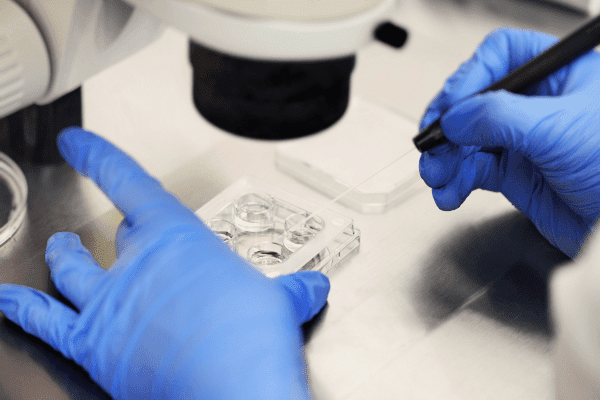

Embryo, Egg, and Sperm Donation in Turkey – Bioethics Law:
The bioethics laws regulating IVF in Turkey are stricter than in most European countries.
The donation of embryos, eggs, and sperm is prohibited in Turkey. Couples must be married and provide their marriage certificate before starting their ART (assisted reproductive technology) journey in Turkey. Surrogacy is also prohibited.
The law allows PGT (preimplantation genetic testing) and PGS (aneuploidy screening), but not embryo sex selection.
Unlike in other countries, Turkey has laws protecting couples’ embryos. Annual storage fees are required. However, it is strictly prohibited in Turkey to donate these embryos or to discard them without the parents’ consent.
Success Rates of In Vitro Fertilization in Turkey:
Turkey receives thousands of couples each year from many countries around the world due to its success in IVF treatment. The success rate obviously depends on the woman’s age and several factors such as chronic diseases, which tend to affect embryo quality, immune problems, and more. However, the rate can reach up to 50% success. jusqu’à 50 % de réussite. Ce taux peut depasser 60 % de réussite This rate can exceed 60% success when couples are prepared at our center for several weeks before their IVF journey and prior to their arrival, thanks to the supplementation prescribed by our naturopath. If you notice some clinics advertising higher rates, this does not always reflect reality.
Duration of the ART (Assisted Reproductive Technology) Journey in Turkey:
The duration of IVF in Turkey varies for each couple. A stay of 20 to 23 days is required for a fresh embryo transfer. In cases where the transfer is to be done with frozen embryos for medical reasons, or if the couple chooses to undergo PGT, the stay is split into two parts: the first part requires the couple to remain in Turkey for 17 to 20 days, including weekends, and the couple must return for the transfer in another cycle for a period of 10 to 15 days. Note that the husband must be present during the first cycle for sperm collection and to sign the approval for PGT, if it is performed, and during the second cycle only to sign for the embryo transfer.
Is a Visa Required to Undergo IVF in Turkey?
To undergo IVF in Turkey, the requirements depend on the couple’s nationality. Citizens of the Schengen Area and the European Union are exempt from a visa for a tourist stay of up to 90 days. Canadian and American nationals must obtain an electronic tourist visa through consular services. Moroccan and Tunisian citizens also benefit from a visa exemption for short-term tourist stays. However, Algerian citizens must obtain a visa before traveling to Turkey. For nationals of other countries, it is recommended to check with the Turkish consulate in their country of residence to know the visa requirements.
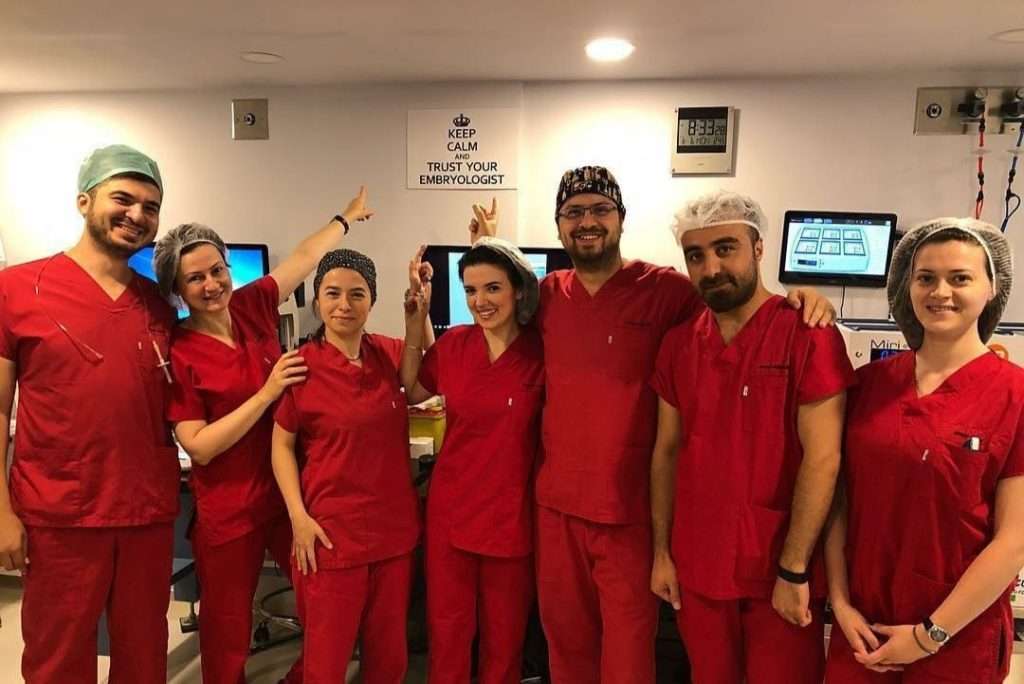
Our fertility clinic, Oumnia, is accredited by the JCI (Joint Commission International) and certified ISO 9001. We have laboratories equipped with the most advanced technologies in the field, such as the IMSI technique and extended culture, all included in the overall cost of our package. Our medical team, graduates of the top medical universities in Turkey and Europe, is highly experienced and recognized as one of the most competent in the world.
The prohibition of embryo donation motivates our team, along with Turkish doctors, to make every possible effort to help couples have a child of their own blood, without resorting to egg, sperm, or embryo donation.
A Brief Message from Our Fertility Specialist at the Oumnia Team: The professionalism of our team and the success of the treatment you receive are inseparable. We understand the concerns of our international patients and guide them throughout the process to ensure they feel comfortable. Our commitment does not end when patients return to their home countries; we remain in contact, share in their experiences, and provide guidance throughout the process. They can also reach out to us at any time.