
Services
- Home
- /
- Preimplantation Genetic Testing (PGT)
Our Services
Contact Us
+90 541 132 22 19
info@oumniafertility.com
Balat, Hızır Çavuş Mescidi Sk. 40/A, 34087 Fatih/İstanbul, Turquie

PGT-A: Preimplantation Genetic Testing for Aneuploidy (Chromosomal Abnormalities)
Chromosomal abnormalities in embryos are one of the main reasons for low pregnancy success rates. Only embryos with the correct number of chromosomes can lead to the birth of a healthy baby. This technique allows us to set aside embryos with genetic alterations, even if their appearance suggests they are of good quality.
By avoiding the transfer of these altered embryos, we prevent the couple from facing the pregnancy of an affected baby, implantation failure, or early miscarriage.
For example, an extra copy of chromosome 21 can cause Down syndrome (trisomy 21). Other common chromosomal abnormalities include trisomy 18, trisomy 15, or the presence of 47 chromosomes (Klinefelter syndrome, XXY).
Who should be recommended for PGT-A?
- Women over 35 years old
- Women who have experienced recurrent miscarriages and/or embryo implantation failures in two or more IVF cycles
- Oligo‑terato‑asthenozoospermic sperm samples
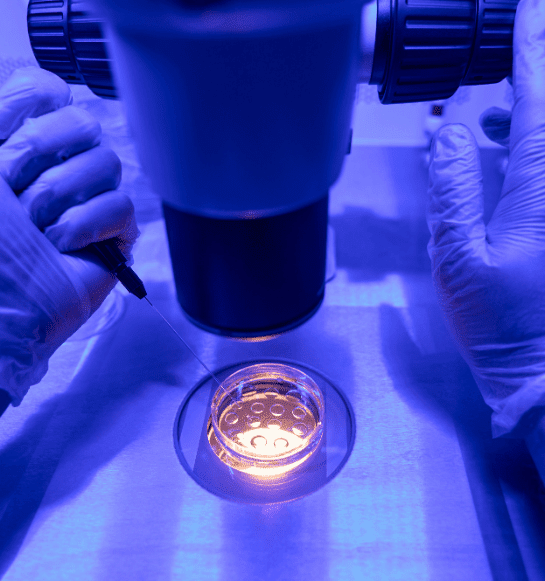
What does PGT-A involve?
During your IVF protocol, our gynecologist designs the treatment from the start of the patient’s menstrual cycle. This treatment includes ovarian stimulation aimed at obtaining the eggs needed for the process. Once retrieved, these eggs are used in an in vitro fertilization (IVF) cycle to create embryos.
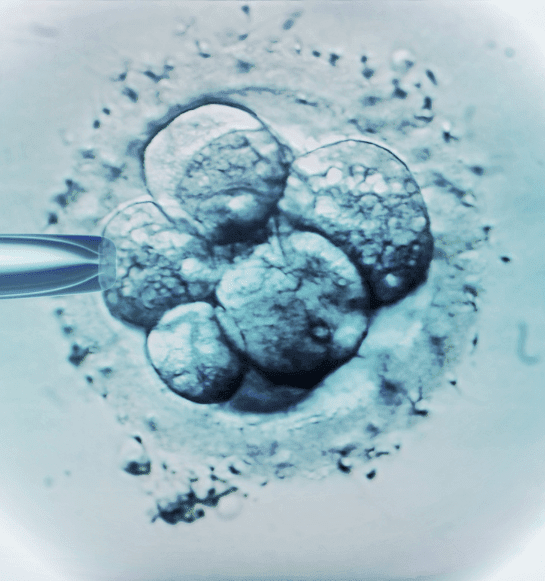
At an advanced stage of development, usually on the fifth or sixth day (called the blastocyst stage), embryonic cells are collected using a technique called embryo biopsy. The resulting embryos are then cryopreserved, awaiting their later transfer.
The test result is available after 15 to 20 days.
When we perform the biopsy, our goal is to analyze the embryo’s chromosomes, allowing us to obtain an accurate diagnosis. Once the chromosomal diagnosis is complete and the embryo is deemed healthy, we schedule the patient for the next desired cycle. We prepare the mother’s endometrium for the transfer of the healthy embryo, excluding embryos with chromosomal abnormalities. This reduces the risk of failed transfers and increases the chances of success for the patient.
PGT-M: Preimplantation Genetic Testing for Monogenic Disorders
This involves the genetic analysis of embryos to detect a hereditary disease in a couple. This procedure allows for the identification of genetic mutations responsible for the disease in the prospective parents.
First, we conduct a genetic study of the parents to identify the mutations responsible for the disease. Then, we perform a disease-specific study within the family, based on the results of the previous genetic analysis.
The diseases can be of various types: autosomal recessive, autosomal dominant, or X-linked, such as Fragile X syndrome, Hemophilia A, cystic fibrosis, Huntington’s disease, sickle cell anemia, Marfan syndrome, among others.
Who should be recommended for PGT-A?
- To couples in which one partner has a genetic disease that would be transmitted dominantly (50% of their children would be affected).
- To couples in which the mother is a carrier of an X-linked genetic disease (50% of their children would be affected).
- To couples in which both partners are carriers of a recessive genetic disease (25% of their children would be affected).
The treatment duration generally ranges from 21 to 23 days, although it may vary depending on each couple’s individual needs. For patients undergoing classic IVF, ICSI, or IMSI, the process typically lasts about three weeks (with fresh embryo transfer).
Several examinations are required. We ask that you send us your thyroid panel results, hormonal profile including AMH, FSH, prolactin, and LH levels, as well as your hysterosalpingography, which helps assess the uterine cavity and detect any potential issues.This stage is reviewed individually and explained by your coordinator. The doctor may also request additional blood tests and your antral follicle count, if necessary.For men, a sperm analysis (spermogram) is required, and further tests may be requested depending on those results to complete your file.
For a remote consultation, you can reach us via WhatsApp or Viber at: 📞 +90 541 132 22 19 You can also contact us by email at: 📧 info@oumniafertility.com